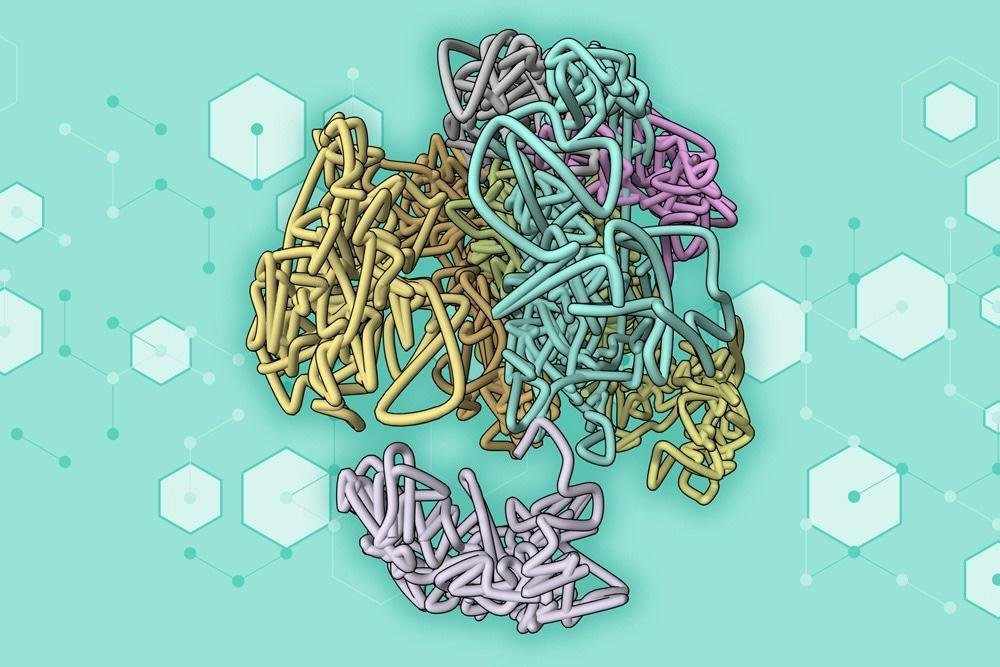
For many years, DNA was thought to be packaged in nucleosomes much like beads on a string. Ramani et al. report that packaging is more dynamic: DNA bends, loosens, and distorts in specific ways that may relate to gene activity.
Using single-molecule mapping and computational analysis, the authors report that more than 85% of nucleosomes show signs of distortion, with parts of the DNA temporarily exposed, and that these changes are not random.
These distortions follow patterns, forming what the authors of the research suggest is a new kind of “nucleosome grammar”, a hidden set of rules that determines when and where DNA becomes accessible to the cell’s machinery.
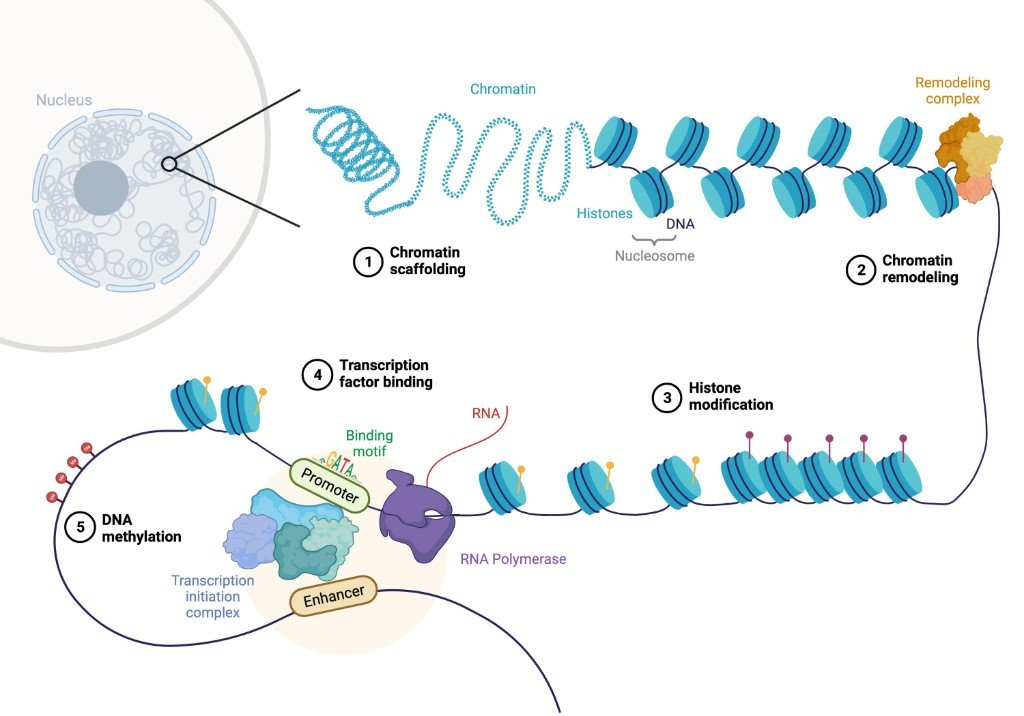
The authors applied machine-learning analysis to DNA accessibility data to detect subtle differences in nucleosome structure�including partial unwrapping or altered composition�that aligned with regulatory signals in their dataset.
Distortion patterns were associated with transcription factor binding, suggesting that gene regulation may depend on nucleosome shape as well as whether DNA is wrapped or open.
For decades, biology has relied on a simple idea: tightly wrapped DNA is “off,” and open DNA is “on.” This study suggests that it is not that simple. Instead, DNA exists in a spectrum of structural states, twisted, loosened, partially exposed, each carrying different regulatory meaning. These nuanced shapes appear to guide how genes are activated during development, differentiation, and possibly disease.
The paper also reports evidence that some proteins can reshape nucleosomes and thereby influence local DNA accessibility.
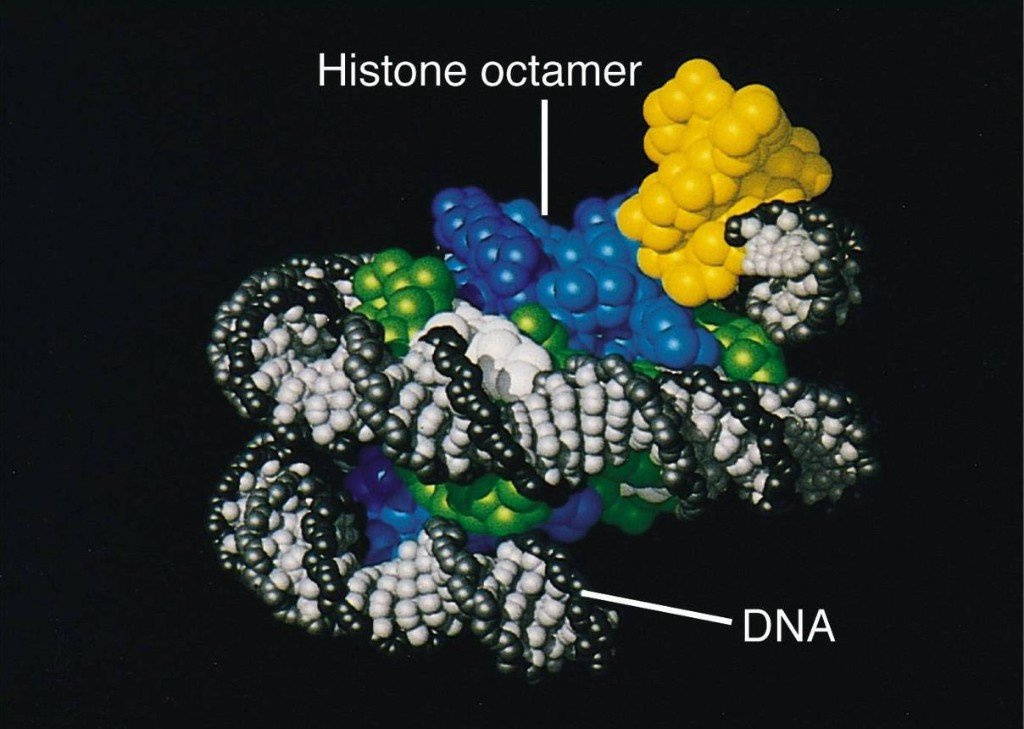
Ramani et al. discuss implications for chromatin structure and gene regulation in the full article�see Pervasive and programmed nucleosome distortion on single chromatin fibres (Nature, 29 April 2026; doi:10.1038/s41586-026-10418-6).